Set Life: Atlanta stars in Argentine independent filmmaker’s first iPhone-shot travel documentary
Right away, Sebaztian Baz observed that the in-town Atlanta landscape was full of traffic cones. So, on his first trip to visit the city, the up-and-coming Buenos Aires-based filmmaker picked up a cone, flipped it around and peered through it like a telescope.
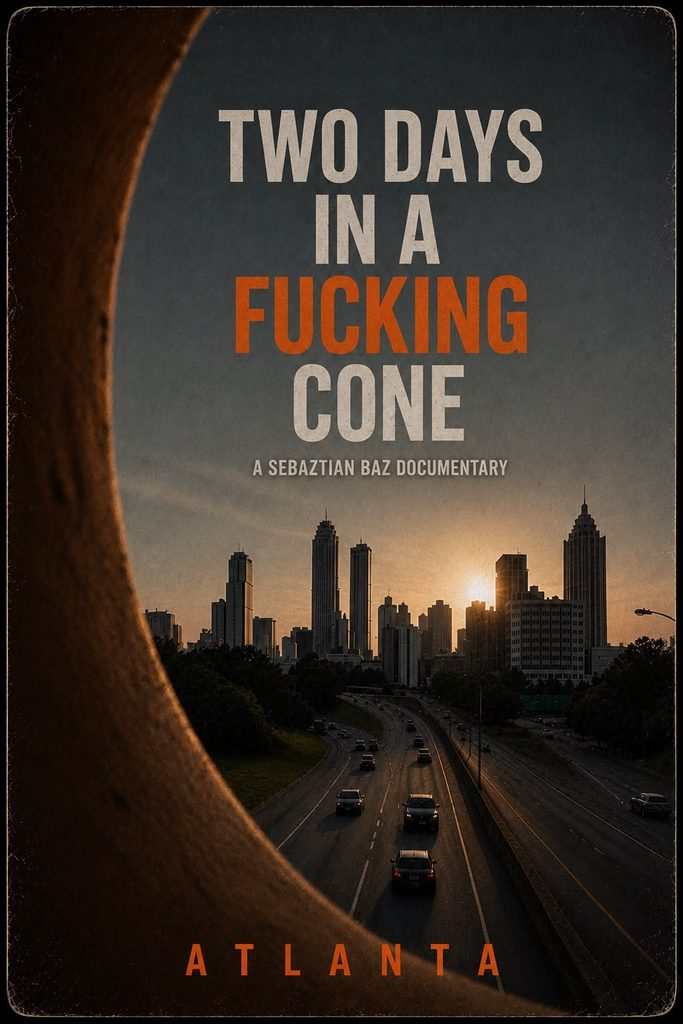
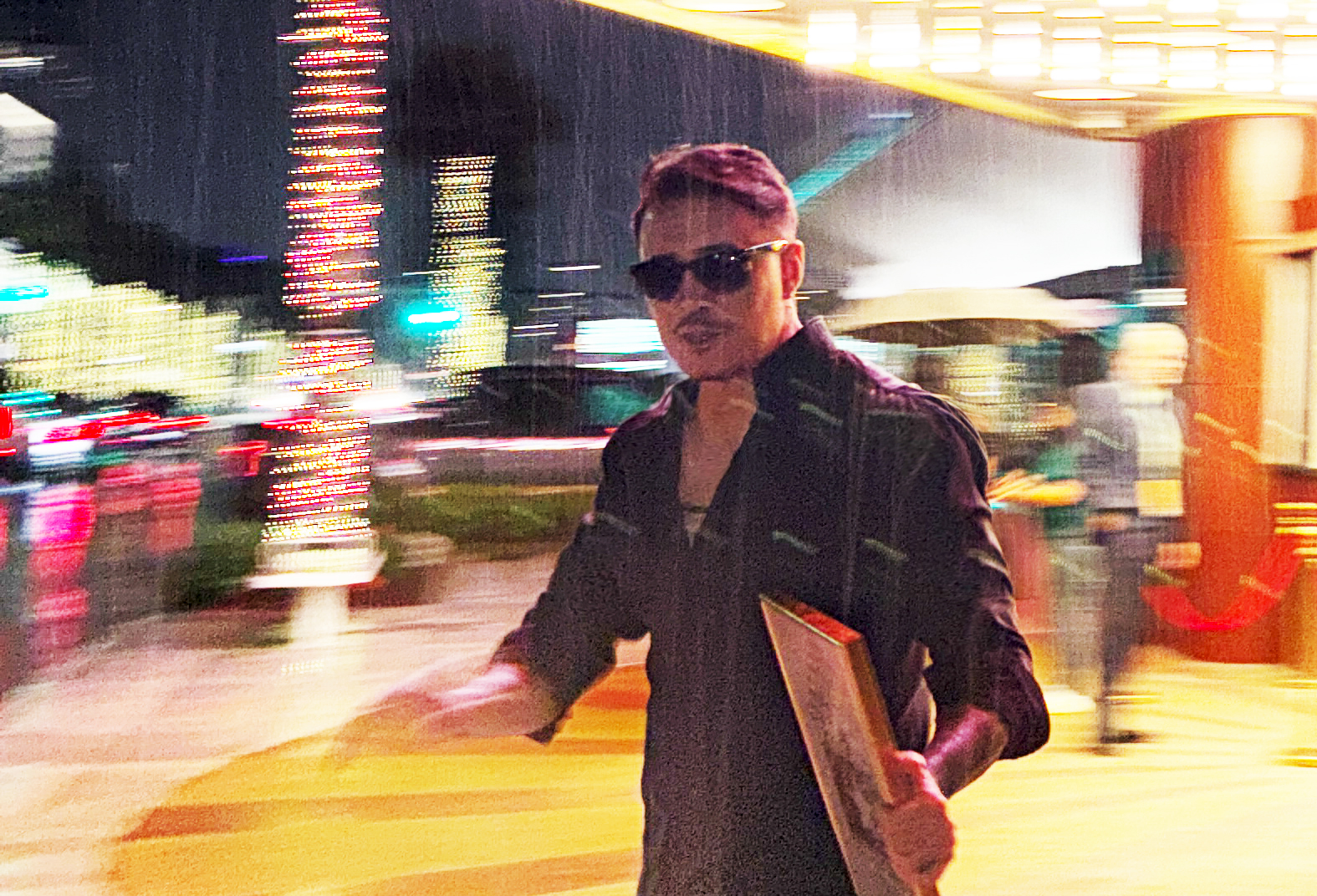
Baz’s first documentary project, Two Days in a Fucking Cone, was conceived on the spot. So he traversed the city’s downtown and Midtown areas with an iPhone as his camera, which he chose for spontaneity in movement, despite the Sony Alpha camera he also had on hand.
Speaking with ArtsATL through translator Vanesa Stay, Baz explains what brought him to the United States in the first place.
According to Baz, he visited Houston in spring 2025 for its 58th annual international film festival (WorldFest-Houston) and the premiere of his experimental vertical film Sombras Chinas (2025) — “vertical” meaning shot in a vertical (9:16) orientation for viewing on a mobile device. The film, about a social media-addicted influencer on a quest to win back her ex-boyfriend, was created with a team of student filmmakers on a microbudget of $18,000 and earned Baz the festival’s Gold Remi Award for Best Experimental Feature. In Argentina, Sombras Chinas is the first vertical feature film to achieve a commercial theatrical release at Cine Gaumont, and Baz is credited as both screenwriter and director.
In addition to the WorldFest-Houston award, Sombras Chinas racked up a string of other festival accolades: Best Comedy, Best Director, Best Production Design and Best Experimental at the Rome International Movie Awards in Italy in 2025 and other awards in the United States, such as Best Director of a Feature at the New Jersey Film Awards.
In his days in the United States, following WorldFest-Houston, Baz says, “I wanted to visit other cities, too. To begin with, I was very curious about Atlanta and New Orleans.”
He chose Atlanta first.
“As I was filming, I realized it was through my own limitations,” Baz describes, circling back to the importance of the metaphorical lens of the traffic cone and his own personal tunnel vision. “I wasn’t really filming the city as it is but through my limited view of it.”
Without the means to see everything a city has to offer while simultaneously and intentionally gravitating away from tourist attractions, Baz says his view was limited even further.
And yet, the constraints of time and money became the very things that allowed him to focus on the authentic day-to-day happenings and interactions he captured in the documentary.
At this stage, Baz also has visited New Orleans and Los Angeles, and these episodes are currently in post-production in Buenos Aires alongside Atlanta’s. Each episode will have a runtime of no more than 25 minutes, he reports.
Philosophically, Baz notes this about his ongoing two-day deep dives into each city: “The cone applies to everything in life, not just to my documentary. Because we all see through our own cones, through our own limitations, through our own baggage … whatever we carry with us changes our perspective on things.”
Part of Baz’s personal cone of perception, he says, is feeling apart from the world as opposed to being a part.
“Anywhere, I usually feel out of place or like I don’t fit in,” Baz says. “For example, in going to the usual places like tourist attractions or when I go to traditional weddings and even in the family picture at dinner, these things are out of my comfort zone.”
In his recent visit to Los Angeles for an episode of the documentary, Baz experienced the disconnect when he came upon other Argentinian travelers. “They were so busy doing all these excursions and had such a long list of things to do, and those things are not for me,” he notes.
He continues, “When I go to a new city, I would enjoy more going by foot and doing the everyday things and going into the suburbs, too, and getting to know the residential area and then taking the subway.”
As he traversed Atlanta for Episode 1, Baz admits that the city surprised him and drew the outsider in.
“At first, I felt uncomfortable when people were watching me film, and I wondered, ‘Why are they staring at me?’ But then, on some occasions, these people came up to me, and they started a conversation with me and my broken English,” he says. “They were very pleasant people, and it was very surprising to talk to these people.”
It hasn’t always been film that has struck Baz’s chord for wanderlust. As he notes, “My main focus is coming from a music background, so I want pretty much everything that you’re seeing to be connected to music.”
In the Atlanta Episode 1 of Two Days in a Fucking Cone, he chose to create music from the background that his viewers will experience. “To create sounds from scratch that go with the city and what you’re seeing,” as he describes it. “Honks and existing songs from the city, and for some episodes I’m exploring to find a poem.”
Today, almost like a traveling bass line, Baz moves through each U.S. city he’s portraying in the documentary through his lens — his cone of perspective — with a heightened love for the art of telling stories digitally on film.

“I was a student and started studying film in 2019, when the pandemic hit. I graduated in 2023 and started to do an independent film with my friends. And I did not expect this. It started as kind of a personal project and something to do for myself,” he says of both the documentary in post-production and his success with 2025’s Sombras Chinas. “I didn’t expect for it to reach out and do so well, and to resonate in Argentina and the U.S.”
And yet, the international film scene has taken notice. New York Amsterdam News, for instance, has praised Baz’s work as showcasing an original cinematic voice, with critic Lapacazo Sandoval calling Baz “a filmmaker to keep an eye on.”
Because Baz is self-professed to feel most comfortable taking his work a bit outside of societal norms, maybe it’s this penchant in his filmmaking that viewers, festival judges and critics are finding alluring.
Perhaps, whether they realize it or not, people are intrigued by the view through Baz’s cone and its Argentinian filter.
And perhaps it’s a reception he will repeat with his upcoming release of Two Days in a Fucking Cone and its first episode featuring Atlanta. Once complete, Baz says viewers can expect a full-screen, 16:9 wide-screen experience.
And does he have any plans for the documentary’s distribution?
“It all depends on how the end product feels to me in terms of quality, and then my idea is to first send it to some festivals to see how well it does,” Baz says. “I would also consider YouTube, all on the end product.”
Essentially, he’s fluid about the manner of its release, much as he found Atlanta to be comfortingly malleable as he was shooting Episode 1.
“Everyone was doing things individually, yet in a group. Even though people were doing different things, they were united,” he muses, recalling time spent shooting along the Atlanta Beltline.
Outside his cone, in contrast, Baz finds, “The world right now is very separate.”
::

Carol Badaracco Padgett is an Atlanta-based freelance writer who focuses on film and television, the automotive industry, architectural design and collaborative storytelling projects.
STAY UP TO DATE ON ALL THINGS ArtsATL
Subscribe to our free weekly e-newsletter.

PLEASE SUPPORT ARTSATL
Your Gift Sustains the Coverage You Count On!
Related Posts